history of computer pdf
Computer history documentation‚ often preserved as PDFs‚ showcases pivotal moments like Babbage’s Engine and the rise of personal computers.
PDFs serve as vital archives‚ encapsulating timelines from the 1600s to 1997‚ and milestones documented by institutions like the Computer History Museum.
The Significance of Documenting Computer History
Documenting the evolution of computing is paramount‚ as it reveals a trajectory of relentless innovation‚ shaping modern society profoundly. Preserving this history‚ increasingly through PDF formats‚ ensures future generations understand the foundations of their digital world. These digital archives capture not just technical specifications‚ but also the societal impact of each advancement.
PDFs offer a stable‚ accessible medium for archiving crucial documents – from Charles Babbage’s conceptual designs to timelines detailing the transition from vacuum tubes to microprocessors. The Computer History Museum’s extensive timeline‚ often available as a PDF‚ exemplifies this commitment to preservation. Without such documentation‚ the context and ingenuity behind these breakthroughs risk being lost.
Furthermore‚ understanding past challenges and successes informs current research and development. PDF-based historical records allow researchers to analyze previous approaches‚ avoid repeating mistakes‚ and build upon existing knowledge. The accessibility of these resources‚ facilitated by PDF technology‚ democratizes access to this vital intellectual heritage‚ fostering continued innovation and a deeper appreciation for the field’s remarkable journey.
Scope of this Historical Overview
This overview will trace the history of computing‚ focusing on key milestones readily documented and increasingly accessible via PDF archives. We’ll begin with pre-1940s conceptual foundations – Babbage’s Analytical Engine and Lovelace’s pioneering work – and proceed through the four established generations of computers: vacuum tubes‚ transistors‚ integrated circuits‚ and microprocessors.
The narrative will highlight pivotal innovations‚ such as the ENIAC‚ UNIVAC I‚ and the Intel 4004‚ examining their technological underpinnings and societal impact. Crucially‚ we’ll explore how these developments are now preserved and disseminated through PDF documents‚ including timelines created by institutions like the Computer History Museum.
While acknowledging the emergence of a potential fifth generation‚ this overview primarily concentrates on the established eras‚ leveraging PDF-based resources to illustrate the evolution. The scope extends to the rise of the personal computer‚ the internet‚ and the role of PDFs themselves as a medium for preserving this invaluable technological heritage‚ offering a comprehensive‚ digitally-accessible historical account.
Early Computing Concepts (Pre-1940s)
Early concepts‚ like Babbage’s Analytical Engine (1822)‚ laid the groundwork for modern computers‚ with details often found in historical PDF documents today.
Charles Babbage and the Analytical Engine
Charles Babbage‚ a 19th-century English polymath‚ conceived the Analytical Engine‚ a mechanical general-purpose computer. Though never fully built in his lifetime due to funding and technological limitations‚ its design contained elements remarkably similar to modern computers – an arithmetic logic unit‚ control flow‚ and integrated memory.
Detailed schematics and descriptions of the Analytical Engine are now widely accessible through digitized historical documents‚ frequently preserved as PDFs by institutions like the Computer History Museum and various university libraries. These PDF archives allow researchers and enthusiasts to study Babbage’s groundbreaking work in detail‚ revealing the sophistication of his vision.
The Engine’s design utilized punched cards‚ inspired by the Jacquard loom‚ to input programs and data. Studying these PDF resources highlights Babbage’s foresight in anticipating the need for programmable computation. The availability of these digitized materials ensures Babbage’s legacy and the foundational principles of computing are preserved for future generations‚ readily available in a universally accessible format.
Ada Lovelace: The First Programmer
Ada Lovelace‚ a 19th-century English mathematician‚ is widely recognized as the first computer programmer. Her notes on Charles Babbage’s Analytical Engine included an algorithm intended to be processed by a machine – a crucial step beyond simply envisioning computation.
Lovelace’s detailed notes‚ originally published in 1843‚ are now readily available in digitized formats‚ often as PDF documents. These PDF archives showcase her understanding of the Engine’s potential beyond mere calculation‚ recognizing its capacity for general-purpose computation‚ including composing elaborate music.
The accessibility of these PDFs allows modern programmers and historians to analyze Lovelace’s work‚ appreciating her pioneering contribution to the field. Her notes demonstrate a remarkable grasp of abstract concepts and algorithmic thinking‚ solidifying her place as a foundational figure in computer science. Digitization ensures her legacy endures‚ accessible to anyone interested in the origins of programming‚ preserved within easily shareable PDF files.
The Development of Punched Card Technology
Punched card technology‚ a cornerstone of early computing‚ emerged as a method for automating textile looms in the early 19th century‚ predating electronic computers. Joseph Marie Jacquard’s loom‚ controlled by punched cards‚ inspired later innovations in data processing and storage.
Herman Hollerith adapted this technology for the 1890 US Census‚ significantly speeding up data tabulation. His system utilized punched cards to store and process census information‚ marking a pivotal moment in automated data handling. Detailed documentation of Hollerith’s system‚ including schematics and operational manuals‚ are now frequently found as digitized PDF documents.
These PDF archives provide invaluable insights into the mechanics and implementation of early data processing. The transition from Jacquard’s looms to Hollerith’s tabulating machines‚ and ultimately to early computers‚ is clearly illustrated through these preserved materials. Studying these PDFs reveals the foundational role punched cards played in shaping the landscape of modern computing‚ offering a tangible link to the past.
Early Mechanical Calculators
Early mechanical calculators‚ precursors to modern computers‚ represent a crucial stage in the evolution of automated computation. Devices like Wilhelm Schickard’s Calculating Clock (1623) and Blaise Pascal’s Pascaline (1642) demonstrated the feasibility of mechanizing arithmetic operations‚ paving the way for more complex machines.
Gottfried Wilhelm Leibniz’s Stepped Reckoner (1694) further advanced the field by incorporating multiplication and division capabilities. Detailed diagrams and descriptions of these early calculators‚ often meticulously hand-drawn‚ are now frequently preserved and accessible as digitized PDF documents.
These PDF archives offer a unique window into the ingenuity of early inventors and the challenges they faced. Studying these historical documents reveals the gradual refinement of mechanical calculation techniques. The availability of these PDFs allows researchers and enthusiasts to explore the foundational principles upon which modern computing is built‚ showcasing the iterative process of innovation.
First Generation Computers (1946-1959): Vacuum Tubes
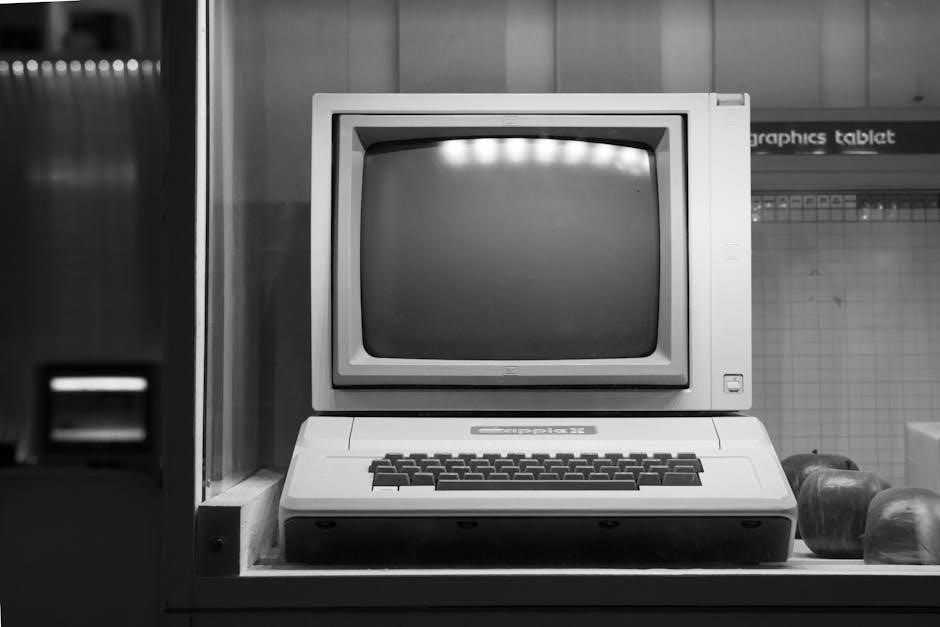
PDF documentation details ENIAC and UNIVAC I‚ pioneering machines utilizing vacuum tubes. These early computers’ schematics and operational manuals are now digitized PDFs.
ENIAC: The First Electronic General-Purpose Computer
ENIAC (Electronic Numerical Integrator and Computer)‚ completed in 1946‚ represents a monumental leap in computing history‚ and its story is extensively documented in numerous PDF archives. Early technical reports‚ operational manuals‚ and even photographs of the massive machine are now readily available as digitized PDFs.
These PDF resources detail ENIAC’s construction‚ utilizing over 17‚000 vacuum tubes‚ and its initial purpose: calculating ballistic firing tables for the U.S. Army during World War II. PDFs showcase the complex wiring and programming methods‚ which involved physically re-wiring the machine for each new task – a far cry from modern software.
Researchers and historians rely on these PDF documents to understand the challenges faced by the ENIAC’s creators and operators. Furthermore‚ PDFs containing oral histories from the individuals who worked on ENIAC provide invaluable firsthand accounts of this groundbreaking technology. The preservation of ENIAC’s history through PDFs ensures its legacy endures for future generations.
UNIVAC I: The First Commercial Computer
UNIVAC I (Universal Automatic Computer I)‚ delivered to the U.S. Census Bureau in 1951‚ marked the dawn of commercial computing‚ and its history is richly preserved in accessible PDF formats. Numerous PDF documents detail its development by Remington Rand‚ transitioning computing from wartime necessity to business application.
These PDF archives contain original sales brochures‚ technical specifications‚ and operational manuals‚ illustrating UNIVAC I’s capabilities – including data processing for businesses and predicting election outcomes. Early case studies‚ often found as scanned PDFs‚ demonstrate its impact on industries like insurance and banking.
The PDF record also highlights the challenges of selling such a novel technology. Marketing materials aimed at convincing businesses of the value of automated data processing are readily available. Furthermore‚ digitized PDFs of interviews with early UNIVAC I users offer insights into the practical realities of adopting this pioneering machine. The preservation of UNIVAC I’s story in PDF form is crucial for understanding the evolution of the computer industry.
The Role of Vacuum Tubes in Early Computing
Vacuum tubes were fundamental to the first generation of computers (1946-1959)‚ and their significance is extensively documented in historical PDF resources. These PDFs detail how these fragile glass components acted as electronic switches‚ enabling calculations within machines like ENIAC and UNIVAC I.
Technical manuals‚ often available as scanned PDFs‚ illustrate the complex circuitry reliant on thousands of vacuum tubes. These documents reveal the challenges of maintaining these early computers – frequent failures and immense power consumption. PDF archives also showcase the heat generated‚ necessitating elaborate cooling systems.
Furthermore‚ historical analyses‚ presented in PDF format‚ explore the limitations imposed by vacuum tube technology‚ driving the search for alternatives. Diagrams and schematics within these PDFs visually demonstrate the bulky and power-hungry nature of early computer designs. The preservation of this information in PDFs allows researchers to understand the foundational technology that launched the digital revolution‚ and the subsequent transition to transistors.
Programming Languages of the First Generation
PDF documents detailing the first generation of computers (1946-1959) reveal a landscape of programming dominated by machine code and assembly languages. These early languages‚ often described in detailed manuals now available as PDFs‚ required programmers to directly interact with the computer’s hardware.
Early programming techniques‚ meticulously preserved in historical PDF archives‚ involved setting switches‚ plugging cables‚ or using punched cards – a far cry from modern coding. These PDFs showcase the laborious and error-prone nature of early software development.
Furthermore‚ PDF resources illustrate the emergence of early assemblers‚ offering a slight abstraction from machine code. These assemblers‚ documented in technical reports now digitized as PDFs‚ translated symbolic codes into machine instructions. The study of these languages‚ through preserved PDF materials‚ provides insight into the foundational concepts of computer science and the evolution of programming paradigms. These PDFs are crucial for understanding the origins of modern software.
Second Generation Computers (1959-1965): Transistors
PDF archives document the shift from vacuum tubes to transistors‚ boosting reliability and efficiency. These PDFs detail advancements in computer design and performance.
The Transition from Vacuum Tubes to Transistors
PDF documents detailing the second generation of computers (1959-1965) consistently emphasize the monumental shift from bulky‚ energy-intensive vacuum tubes to the significantly smaller‚ more reliable‚ and efficient transistors. These historical PDFs illustrate how this transition wasn’t merely a component swap‚ but a fundamental change in computer architecture and capabilities.
Early PDF reports showcase the challenges faced in adopting transistor technology‚ including manufacturing complexities and initial cost concerns. However‚ the advantages quickly became apparent. Transistors generated less heat‚ consumed less power‚ and were far more durable than their vacuum tube predecessors. Consequently‚ computers became smaller‚ faster‚ and more dependable.
Digitized manuals and technical specifications‚ often available as PDFs‚ reveal how the transistor’s invention spurred innovation in circuit design. This allowed for more complex computations and the development of more sophisticated software. The availability of these PDF resources provides invaluable insight into the engineering breakthroughs of the era‚ solidifying the transistor’s place as a cornerstone of modern computing.
Increased Reliability and Efficiency
PDF archives detailing second-generation computers (1959-1965) consistently highlight the dramatic improvements in reliability and efficiency brought about by the transition to transistors. Historical technical reports‚ now frequently available as searchable PDFs‚ demonstrate a significant reduction in system downtime compared to the vacuum tube era.
These PDF documents reveal that transistorized systems experienced fewer component failures‚ leading to more consistent operation and reduced maintenance costs. The lower power consumption of transistors also translated into substantial energy savings‚ a critical factor for early computer installations. Early PDF manuals showcase cooling system designs that were drastically simplified due to reduced heat generation.
Furthermore‚ digitized maintenance logs‚ preserved as PDFs‚ illustrate the decreased need for frequent component replacements. This increased reliability not only lowered operational expenses but also enabled computers to tackle more complex and prolonged calculations. The cumulative effect‚ documented extensively in these historical PDFs‚ was a substantial leap forward in computing practicality and accessibility.
Early High-Level Programming Languages (FORTRAN‚ COBOL)
PDF repositories of early computing literature reveal the pivotal role of FORTRAN and COBOL in simplifying programming during the late 1950s and early 1960s. Digitized manuals and academic papers‚ readily available as PDFs‚ demonstrate a shift away from tedious machine code towards more human-readable instructions.
These PDF documents showcase how FORTRAN‚ initially designed for scientific and engineering applications‚ enabled programmers to express complex mathematical formulas with relative ease. Simultaneously‚ COBOL‚ tailored for business data processing‚ facilitated the development of applications for managing financial records and administrative tasks. Early PDF examples of COBOL code highlight its English-like syntax.
The emergence of these languages‚ extensively documented in historical PDFs‚ significantly broadened the pool of potential programmers. No longer limited to those with a deep understanding of computer architecture‚ individuals with domain expertise could now directly contribute to software development. These PDF resources illustrate a crucial step towards making computing more accessible and impactful.
Third Generation Computers (1965-1971): Integrated Circuits
PDF archives detail the revolutionary impact of integrated circuits‚ enabling miniaturization and boosting processing power. Historical PDFs showcase the shift and advancements.
The Invention of the Integrated Circuit (IC)
PDF documents detailing the mid-1960s reveal the monumental impact of the integrated circuit (IC). Jack Kilby at Texas Instruments and Robert Noyce at Fairchild Semiconductor independently conceived of this technology‚ forever altering computing’s trajectory. These historical PDFs illustrate how the IC allowed for numerous transistors to be placed on a single silicon chip.
Prior to the IC‚ computers were built with discrete transistors‚ a bulky and unreliable method. PDF archives demonstrate the IC’s immediate effect: drastically reduced size‚ increased speed‚ and improved reliability. Early PDF reports from the era showcase the initial applications of ICs in military and aerospace projects‚ quickly followed by commercial adoption.
The availability of ICs spurred innovation in computer architecture and software development. Digitized historical documents‚ often in PDF format‚ show the rapid evolution from discrete components to complex IC-based systems. These PDFs are invaluable resources for understanding the foundational shift that enabled the third generation of computers and paved the way for future advancements.
Miniaturization and Increased Processing Power
PDF archives from the late 1960s and early 1970s vividly illustrate the dramatic effects of integrated circuits (ICs) on computer size and capability. Historical technical reports‚ frequently preserved as PDFs‚ demonstrate a significant reduction in the physical footprint of computing devices. What once occupied entire rooms could now fit into considerably smaller spaces.
This miniaturization wasn’t merely about size; it directly correlated with increased processing power. PDF documentation reveals how packing more transistors onto a single IC led to faster computation speeds and greater efficiency. Early PDF schematics and performance analyses showcase the exponential growth in processing capabilities.
The availability of more powerful‚ yet smaller‚ computers fueled innovation across various fields. Digitized PDF publications detail the impact on scientific research‚ engineering design‚ and business applications. These historical PDFs are crucial for understanding how the IC revolutionized computing‚ setting the stage for the personal computer revolution and beyond‚ and are vital resources for researchers today.
The Rise of Operating Systems
PDF documents from the mid-1960s onward demonstrate a crucial shift in computing: the emergence of operating systems. Early system software manuals‚ now frequently available as digitized PDFs‚ reveal the increasing complexity of managing computer resources. These systems moved beyond simple batch processing to enable more interactive and efficient computing.
Historical PDFs detailing IBM’s OS/360 and other pioneering operating systems showcase the challenges of time-sharing‚ memory management‚ and peripheral control. These documents illustrate how operating systems abstracted the underlying hardware‚ making computers more accessible to a wider range of users. The evolution is clearly charted in these preserved materials.
Furthermore‚ PDF archives of academic papers and industry reports highlight the theoretical foundations and practical implementations of these early operating systems. Studying these PDFs provides invaluable insight into the design principles that continue to influence modern operating systems‚ and the challenges faced by early computer scientists. They are essential for understanding the foundations of modern computing.
Fourth Generation Computers (1971-Present): Microprocessors
PDF archives document the microprocessor revolution‚ starting with Intel’s 4004‚ and the subsequent personal computer boom. These PDFs detail networking’s growth and preserve vital history.
The Intel 4004: The First Microprocessor
PDF documentation extensively covers the Intel 4004‚ released in 1971‚ marking a monumental shift in computing history. These digital records detail its creation as a single-chip central processing unit (CPU)‚ initially designed for a calculator. Archival PDFs showcase how this innovation dramatically reduced size and cost compared to previous discrete transistor circuits.
Historical PDFs illustrate the 4004’s limited capabilities – a 4-bit processor – yet its significance lies in proving the feasibility of microprocessor technology. These documents often include original datasheets‚ schematics‚ and marketing materials‚ preserved as PDFs for posterity. They demonstrate how the 4004 paved the way for more powerful processors and‚ ultimately‚ the personal computer revolution.
Furthermore‚ PDF repositories contain analyses of the 4004’s architecture and its impact on subsequent microprocessor designs. These resources are invaluable for researchers and enthusiasts seeking a comprehensive understanding of this pivotal moment in computer history‚ readily accessible through digitized PDF formats.
The Personal Computer Revolution
PDF archives meticulously document the explosion of the personal computer (PC) revolution‚ beginning in the late 1970s and early 1980s. These digitized records showcase the emergence of iconic machines like the Apple II‚ Commodore PET‚ and IBM PC‚ detailing their specifications‚ software‚ and cultural impact. Numerous PDF manuals‚ advertisements‚ and magazine articles from the era are readily available.
Historical PDFs illustrate how the microprocessor‚ like the Intel 4004’s successors‚ was central to making PCs affordable and accessible. They chronicle the shift from hobbyist machines to mainstream consumer products‚ fueled by innovations in operating systems and application software. Early PDF-formatted software documentation provides insight into the challenges and triumphs of early PC programming.
Moreover‚ PDF collections preserve the stories of the individuals and companies that drove this revolution. These resources offer a comprehensive view of the PC’s transformative effect on society‚ business‚ and personal lives‚ all conveniently preserved in digital PDF form for future generations.
The Development of the Internet and Networking
PDF documents are instrumental in chronicling the evolution of the Internet and computer networking‚ starting with ARPANET in the late 1960s. These digital archives contain original research papers‚ technical specifications‚ and historical reports detailing the protocols and technologies that underpin the modern Internet. Early PDFs showcase the development of TCP/IP‚ DNS‚ and the World Wide Web.
The rise of networking spurred the creation of numerous PDF-based standards documents‚ outlining communication protocols and network architectures. These resources are vital for understanding the technical foundations of the Internet and its subsequent expansion. Digitized manuals and guides‚ available as PDFs‚ explain the setup and configuration of early network hardware and software.
Furthermore‚ PDFs preserve the cultural impact of the Internet‚ including early websites‚ online communities‚ and the emergence of e-commerce. These digital snapshots offer a unique perspective on the Internet’s transformative power‚ securely stored and accessible through PDF format for historical study.
PDFs as a Medium for Preserving Computer History
PDFs have become an invaluable medium for archiving and disseminating the history of computing‚ offering a stable and universally accessible format. Unlike older digital formats prone to obsolescence‚ PDFs ensure long-term preservation of crucial documents‚ including technical manuals‚ schematics‚ and historical reports. Digitized timelines‚ like those from the Computer History Museum‚ are frequently distributed as PDFs.
The format’s ability to embed fonts and images guarantees accurate rendering across different platforms and over time‚ safeguarding the integrity of historical materials. Original research papers detailing early computer designs‚ such as Babbage’s Analytical Engine‚ are now widely available as searchable PDFs.
Moreover‚ PDFs facilitate the creation of comprehensive digital libraries dedicated to computer history‚ allowing researchers and enthusiasts to explore the evolution of technology. The preservation of early software documentation and programming guides in PDF format is critical for understanding the foundations of modern computing.
Leave a Reply
You must be logged in to post a comment.